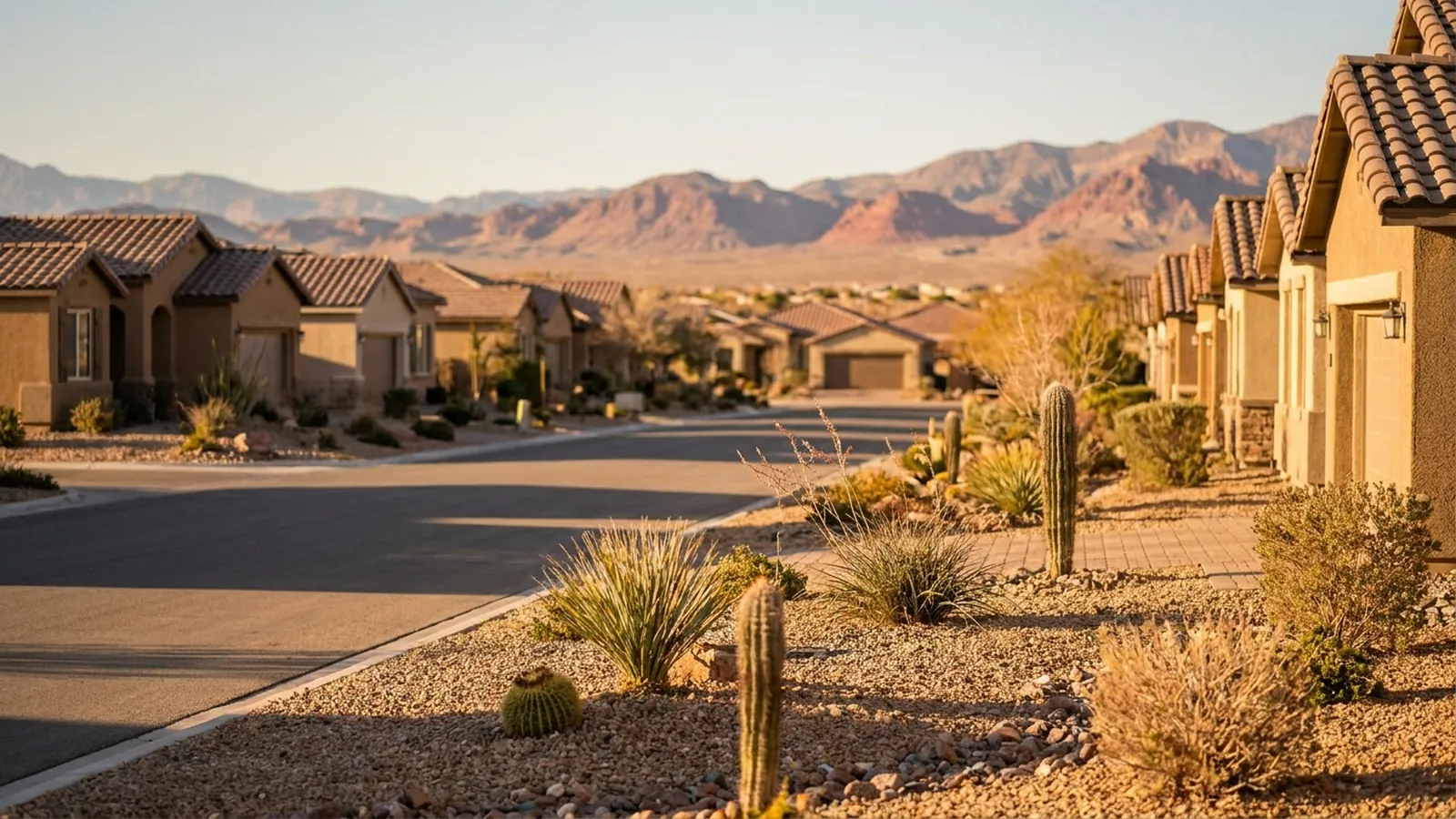
A water softener in Las Vegas costs $1,500–$4,500 installed. The valley's water comes from Lake Mead and runs about 17 grains per gallon (291 mg/L) — very hard by USGS standards — so most homes need a salt-based ion-exchange softener sized to household demand, plumbing layout, and drain access.
Below: the symptoms that mean hardness, what each system type actually does, real local pricing, and how installation differs by neighborhood.
How do you know if you need a water softener?
Most people call because of something they can see or feel, not because they tested the water. These are the symptoms we hear about most:
- White crust on faucets, shower heads, and glass doors that returns within days of cleaning
- Spots on dishes straight out of the dishwasher, even with rinse aid
- Soap and shampoo that won't lather, and a film left on skin after showering
- Stiff, scratchy laundry and towels that stop absorbing
- A water heater that rumbles or knocks — that is scale on the tank bottom
- Falling pressure at one fixture as scale narrows the line
- Ice makers, humidifiers, and coffee makers failing early
Three or more of these together points to hardness. None of it is a health risk; hard water is a nuisance and an equipment problem, not a safety problem.
Why is Las Vegas water so hard?
Roughly 90% of the valley's drinking water comes from Lake Mead by way of the Colorado River, delivered through the Las Vegas Valley Water District. That water travels over limestone and mineral-rich ground before it reaches the reservoir, picking up dissolved calcium and magnesium the whole way. Those two minerals are what "hardness" measures.
The district's 2025 water quality report puts valley hardness at about 291 mg/L, or 17 grains per gallon. For comparison, water is considered "hard" starting around 7 grains. Hardness has crept up over recent years: as Lake Mead's level drops, the remaining water concentrates, and readings vary somewhat by distribution zone, so some addresses test higher than others.
What does a water softener actually do?
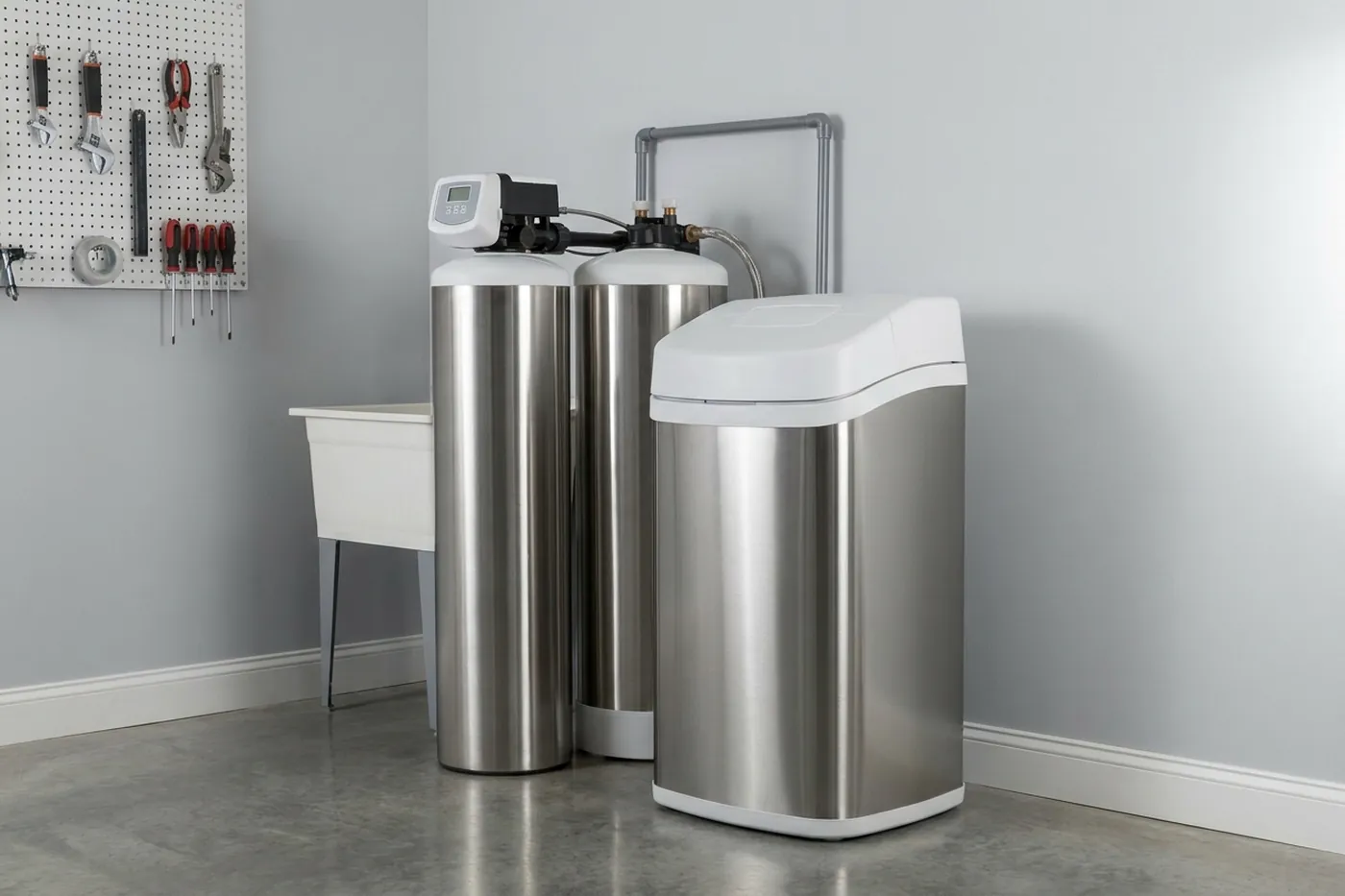
A salt-based softener runs your incoming water through a resin bed that swaps calcium and magnesium for a small amount of sodium. That is ion exchange. Periodically the system rinses the resin with brine from the salt tank and flushes the hardness down the drain — the regeneration cycle, usually run at night.
The practical result: scale stops forming, soap lathers, glass and fixtures stay clean, and your water heater, dishwasher, and washing machine stop working against mineral buildup. On 17-grain water, that difference is not subtle.
Which system is right for your home?
| System | What it does | Maintenance | Best for | Installed cost |
|---|---|---|---|---|
| Salt-based softener | Removes calcium and magnesium by ion exchange | Add salt every 4–8 weeks | Very hard valley water — the default here | $1,500–$3,500 |
| Salt-free conditioner | Alters minerals so they scale less; hardness remains | Little to none | No-salt households, milder needs | $1,000–$2,500 |
| Whole-house filtration | Reduces chlorine taste, odor, and sediment | Media or cartridge changes | Taste and smell complaints | $1,000–$4,000 |
| Reverse osmosis | Removes dissolved solids at one tap | Filter changes about yearly | Drinking and cooking water | $300–$1,200 |
Sizing matters as much as type. A system is rated in grain capacity, and the right size depends on how many people live in the home, how many bathrooms it has, peak simultaneous demand, and the 17-grain hardness load. An undersized unit regenerates constantly and wears out early; an oversized one wastes salt and water. We calculate this before recommending equipment rather than defaulting to the largest unit on the truck.
What does installation involve?
- Free in-home assessment — we look at the loop, main line, drain, outlet, and clearance
- Sizing to household demand and the local hardness load
- Connection at the main with an accessible bypass valve
- Drain and overflow routing for the regeneration cycle
- Programming and startup, then a leak check under pressure
- Walkthrough — salt levels, bypass operation, what normal sounds like
Two to four hours when the loop exists. Longer when we are adding plumbing.
What should you do if the softener is leaking right now?
Turn the unit to bypass first. That is the valve or lever on the plumbing behind the tank, and it routes water around the system so the house keeps running while the leak stops. If you cannot find it, shut off the main at the street side of the house.
Then call (702) 706-8030. We answer after hours and on weekends and schedule same-day or next-day service for active leaks in Las Vegas. Non-urgent repairs and installations are normally scheduled within the same week.
Our services
We install and service every common residential water treatment system in the valley:
Water Softener InstallationWater Softener RepairWhole-House Water FiltrationReverse Osmosis Drinking WaterSalt-Free Conditioners & Salt DeliveryWater Softener Cost Guide
Where we work
We cover the whole Las Vegas valley, and the housing stock changes a lot between neighborhoods — which changes how a system gets installed:
Water softener installation in Las VegasWater softener installation in HendersonWater softener installation in North Las VegasWater softener installation in ParadiseWater softener installation in Spring ValleyWater softener installation in EnterpriseWater softener installation in SummerlinWater softener installation in Sunrise ManorWater softener installation in Boulder City
And for the bars, restaurants, and salons running the same 17-grain water at business volumes, our commercial water softeners in Las Vegas are sized by daily grain load — duplex systems included.
Frequently asked questions
Is Las Vegas tap water hard?
Las Vegas tap water is hard. The valley draws roughly 90% of its water from Lake Mead via the Colorado River, and the Las Vegas Valley Water District reports hardness around 17 grains per gallon (291 mg/L), which the USGS classifies as very hard. It is safe to drink; the problem is scale.
How much does a water softener cost in Las Vegas?
Most whole-home installations run $1,500 to $4,500 installed, depending on system size, whether it is salt-based or salt-free, and whether new plumbing or a drain line is needed.
How long does installation take?
Two to four hours when a softener loop already exists. Homes needing a new tie-in at the main or a fresh drain run typically take most of a day.
Which softener is best for 17-grain water?
A salt-based ion-exchange softener removes the most hardness and is the practical default in the valley. Salt-free conditioners reduce scale without removing minerals and suit households that prefer no salt.
How often do I add salt?
Most valley households refill every four to eight weeks. Very hard water and larger families regenerate more often. Our salt delivery service handles refills if you prefer not to haul bags.
Do you offer same-day service?
Yes for active leaks and no-water situations. We answer after hours and on weekends, and non-urgent work is usually scheduled within the same week.
Will a softener fix the taste of my water?
Not by itself. Softening removes hardness minerals; taste and odor complaints usually trace to chlorine and dissolved solids, which need whole-house filtration or reverse osmosis.
Do I need a plumbing permit?
Most straightforward softener replacements do not, but new plumbing, drain work, or an exterior installation can. We tell you before the work starts if a permit applies to your job.
Get a free Las Vegas estimate
Tell us what you're seeing at your fixtures and we'll recommend a system sized to your home. We call back the same business day.