Home › Services › Whole-House Water Filtration
Whole-house water filtration in Las Vegas costs $1,000–$4,000 installed and treats water where it enters the home. It reduces chlorine taste, odor, and sediment from Lake Mead water. It does not remove hardness — that is the softener's job, and many valley homes run both.
Below: what filtration fixes, what it does not, how it pairs with a softener, and how to size it without losing pressure.
What does whole-house filtration actually remove?
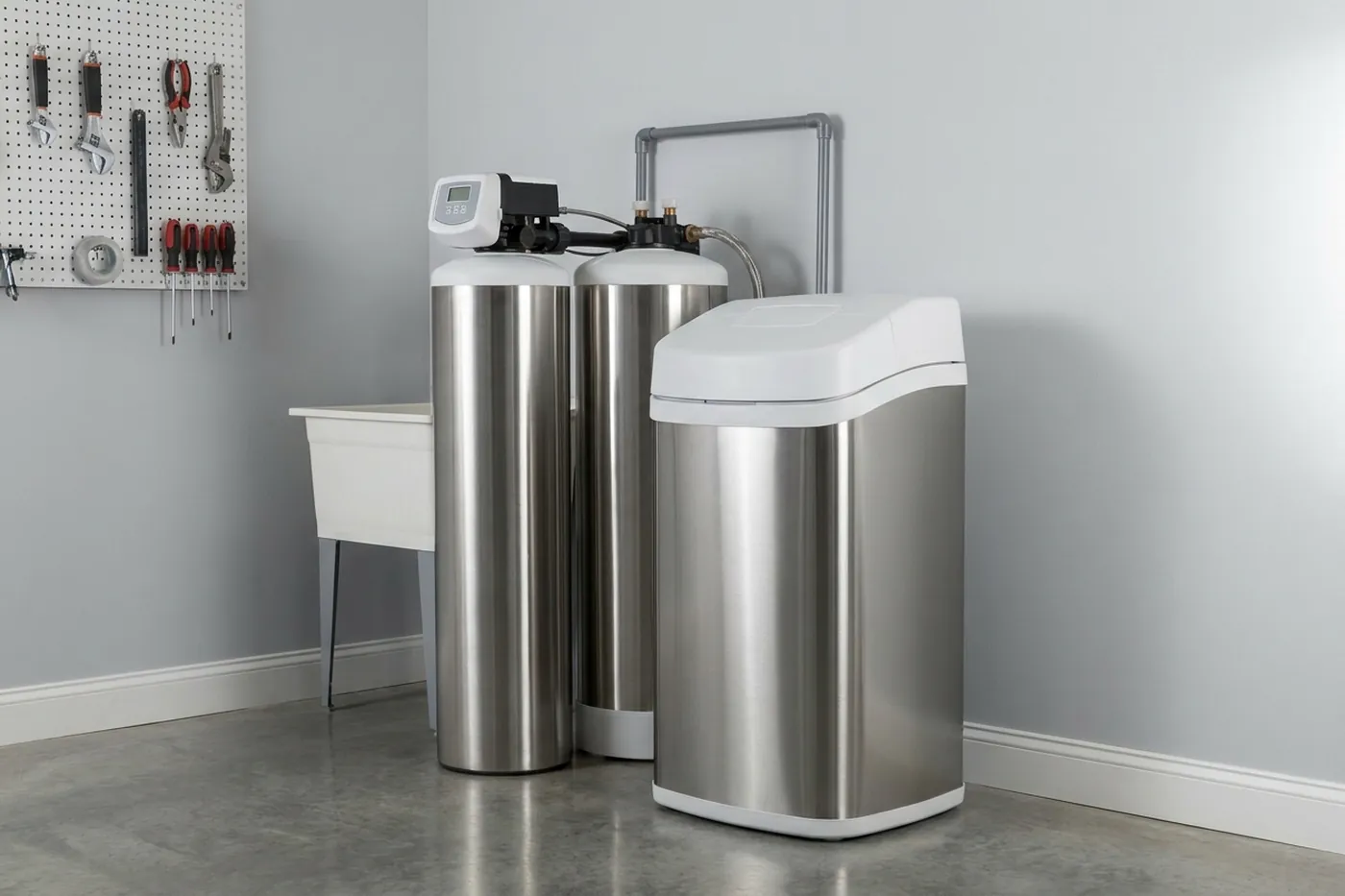
Point-of-entry filtration targets what you can taste and smell. In the valley that is mostly chlorine and chloramine used for disinfection, plus sediment picked up in distribution. Activated carbon handles taste and odor; a sediment stage catches particulate before it reaches fixtures.
What it does not do is soften. Hardness minerals pass straight through carbon. If your complaint is scale and spotting, you need a softener; if it is a chlorine smell in the shower, you need filtration. Many homes here have both complaints.
Why does filter sizing affect water pressure?
Every filter creates resistance. Undersize it and you get a noticeable pressure drop when the shower and the washing machine run together. We size media volume and flow rating to your household's peak simultaneous demand and your service line diameter, so the filter never becomes the bottleneck.
Which filtration type fits your situation?
| Type | Best for | Maintenance | Installed cost |
|---|---|---|---|
| Cartridge housing | Sediment, light taste issues | Cartridge every 3–6 months | $700–$1,900 |
| Carbon media tank | Chlorine taste and odor | Media every 5–7 years | $1,900–$4,400 |
| Backwashing filter | Higher sediment loads | Automatic; needs a drain | $2,600–$5,800 |
| Softener + carbon combo | Hardness and taste together | Salt plus media | $3,600–$7,800 |
What order should the equipment go in?
Sediment first, then carbon, then the softener. Filtering ahead of the softener protects the resin bed from chlorine, which shortens resin life. Getting the order wrong is one of the more common problems we find on systems installed by someone else.
Where we provide this service
We work across the entire valley, and the housing stock changes how the job goes:
Water softener installation in Las VegasWater softener installation in HendersonWater softener installation in North Las VegasWater softener installation in ParadiseWater softener installation in Spring ValleyWater softener installation in EnterpriseWater softener installation in SummerlinWater softener installation in Sunrise ManorWater softener installation in Boulder City
Other services we provide
Water Softener InstallationWater Softener RepairWhole-House Water FiltrationReverse Osmosis Drinking WaterSalt-Free Conditioners & Salt Delivery
Frequently asked questions
How much does whole-house water filtration cost in Las Vegas?
Typical range is $1000 to $4000, depending on equipment, plumbing access, and scope. A written estimate names the equipment and included work before you approve.
How quickly can you schedule?
Same day or next day for active leaks and no-water situations. Non-urgent work is normally scheduled within the same week across the Las Vegas valley.
Do you serve my part of the valley?
We cover Las Vegas, Henderson, North Las Vegas, Summerlin, Enterprise, Paradise, Spring Valley, Sunrise Manor, and Boulder City.
Why does Las Vegas water smell like a swimming pool sometimes?
Chlorine and chloramine are used to keep treated water safe all the way through the distribution system. Levels are safe to drink but can be strong enough to smell and taste, especially in summer when demand and treatment both rise, and especially close to a treatment point in the network.
Carbon filtration is what addresses that. A softener will do nothing for it, which surprises a lot of homeowners who assumed one system fixed everything.
How do you size a filter without losing pressure?
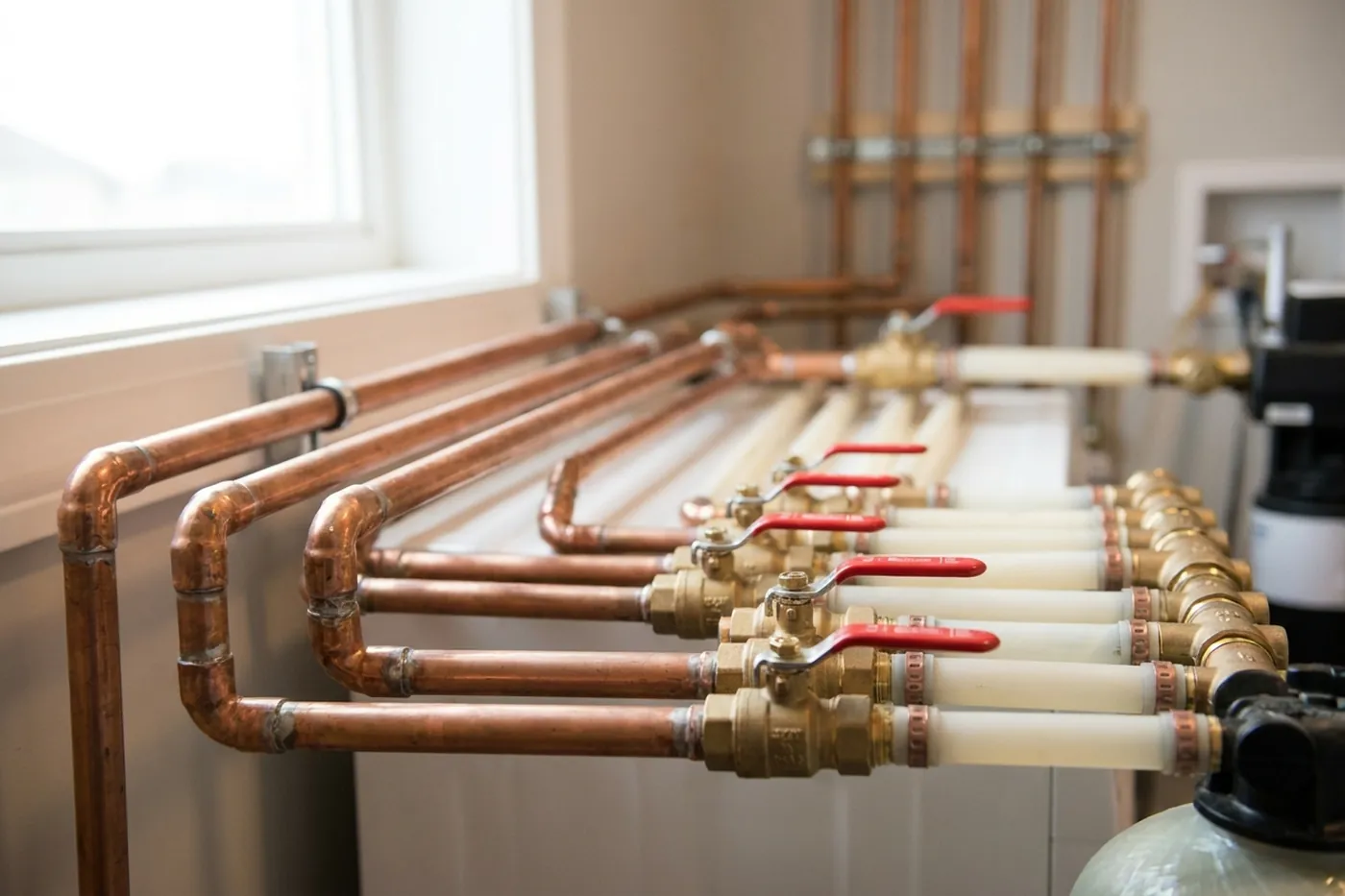
Every filter adds resistance. The number that matters is service flow rate in gallons per minute against your household's peak simultaneous demand — two showers plus a washing machine, for instance. We check your service line diameter and static pressure first, then size the media volume so the filter never becomes the bottleneck.
This is the most common problem we find on filters installed by someone else: a unit rated well below the home's peak demand, producing a pressure drop the owner blames on the city.
What order should the equipment go in?
- Sediment — catches particulate before it fouls anything downstream
- Carbon — removes chlorine, which otherwise degrades softener resin
- Softener — removes hardness
- Reverse osmosis at the kitchen tap if you want drinking-water quality
Putting the softener ahead of carbon shortens resin life measurably. If you already have both installed in the wrong order, reversing them is usually a short job.
How often does the media need replacing?
- Cartridge filters: every three to six months, sooner with visible sediment
- Carbon media tanks: every five to seven years typically
- Backwashing systems: media every five to eight years; the valve needs periodic service
Returning taste or odor is the practical signal that carbon is exhausted, usually before the calendar says so.
Will filtration fix hard water spots?
No. Spots are dissolved hardness left behind as water evaporates. Only removing the hardness stops them, which means a softener. If someone sells you a whole-house filter as a fix for spotting, that is the wrong equipment for the problem.
Get a free Las Vegas estimate
Tell us what you're seeing at your fixtures and we'll recommend a system sized to your home. We call back the same business day.